
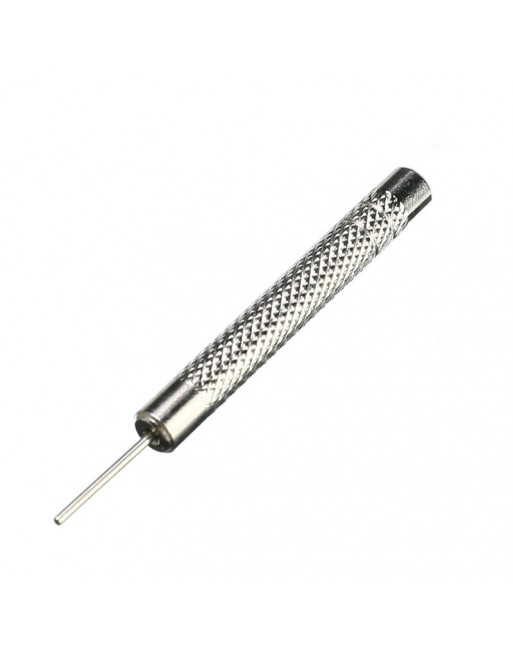
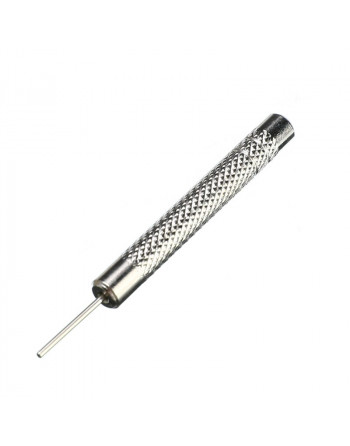
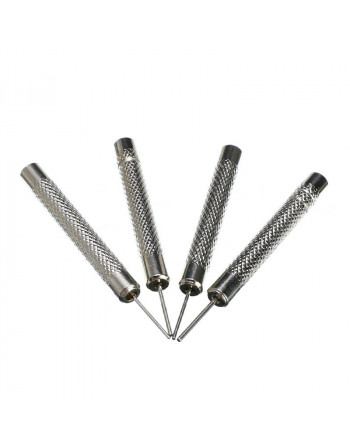
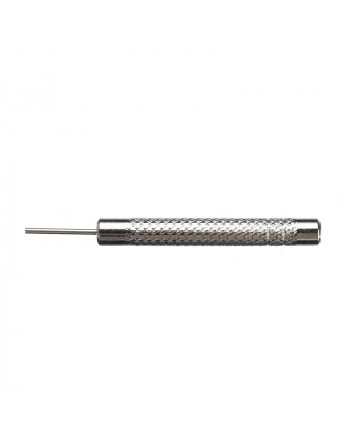
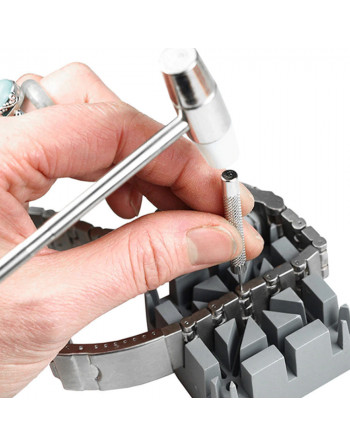
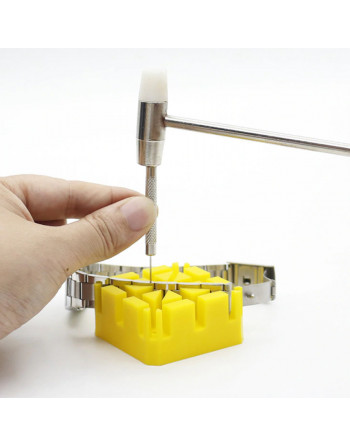
Manual hammer-driven pin punch (0.70 / 0.80 / 0.90 / 1.00 mm) to drive out bracelet pins cleanly without damaging the strap.
 100% Secure Payment
Payment through secure platforms.
 Delivery policy
Fast tracked shipping. Free shipping from €29!
This manual hammer-driven watch pin punch is the bench-grade tool that lets you extract a pin from a steel bracelet link with a few controlled taps of a watchmaker's hammer. Available in four diameters — 0.70, 0.80, 0.90 and 1.00 mm — it covers the vast majority of friction pins, knurled pins and split pins found on modern steel bracelets.
The tool has a steel body with a sturdy handle and a fine tip ground to the chosen diameter. The shaft is straight and rigid, so the energy of a hammer tap is transferred along its axis directly to the head of the pin — no flex, no deflection. The tip is hardened to keep its geometry over hundreds of pin extractions; if it eventually deforms after very heavy use, the punch can be paired with our replacement tips sold separately in the shop.
The choice of four diameters is what makes this punch versatile. Modern bracelets use different pin sizes depending on the brand and the link size: 0.70 mm for thin dress bracelets, 0.80 mm for the most common Seiko and Tissot references, 0.90 mm for thicker sport bracelets, and 1.00 mm for heavy diver bracelets. The shaft must always be slightly smaller than the pin head so it enters the bore without spreading it.
Use the manual pin punch every time you need to resize a steel bracelet, free a stuck pin or replace a broken one. It is also the right tool for bracelets that are too wide to fit inside a small bench punch, such as some 22 mm dive bracelets or chronograph references. The other use case is the precision job — a recalcitrant pin where you need the feel of a controlled tap rather than the constant pressure of a screw drive.
It is not designed for screwed bracelets, where the BERGEON 7260 screwdriver is required, and it is not a substitute for a positioning awl on leather, silicone or rubber straps.
This manual punch is made to the standard of professional watchmaking accessories: hardened tool steel, ground tip, comfortable handle. It is the workhorse alternative to a screw-driven bench punch and remains in everyday use in workshops that also own more expensive machines. With proper alignment and a watchmaker's hammer it gives consistent results for years; the tip diameter can be checked occasionally against a feeler gauge to confirm it has not worn.
Measure the pin head with a caliper if possible; otherwise start with 0.80 mm, which covers the most common bracelets. Buy 0.70 mm in addition for dress watches and 1.00 mm for diver references.
It is strongly discouraged: without a block the bracelet rolls, the punch slips and the pin can bend.
No. Rolex bracelets are screwed; use the BERGEON 7260.
Keep the punch perfectly perpendicular to the bracelet throughout the operation — any angle causes the tip to slip off the pin head and can damage the link. Start with light taps to seat the tip, then increase the force gradually. If a pin refuses to move after several taps, do not force it: a drop of penetrating oil and a few minutes' wait usually free a corroded pin. Once removed, inspect the pin: split or worn pins should be replaced, not refitted.
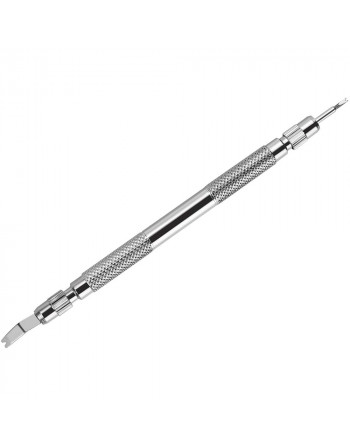
Professional dual-tip stainless steel positioning awl. Knurled grip section ensures precise handling when fitting leather or silicone straps.
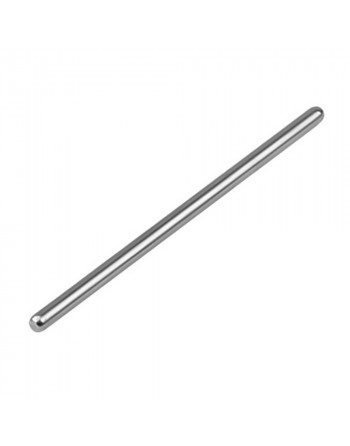
Straight cylindrical watch pin for bracelets without spring or knurl. Available in many sizes and diameters.
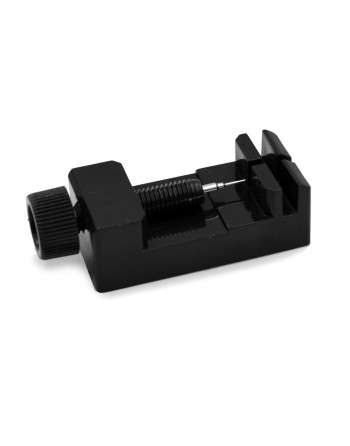
Compact watch pin punch to resize small metal or ceramic bracelets. Supplied with 2 spare tips for removing links easily.
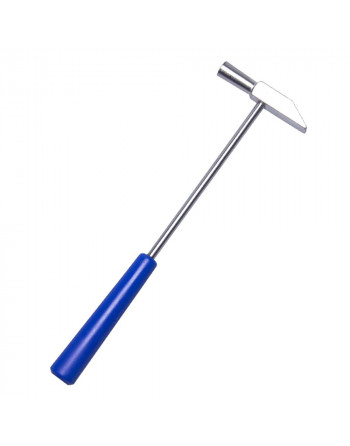
Professional hammer for watch repair, useful for refitting bracelet pins on steel straps.
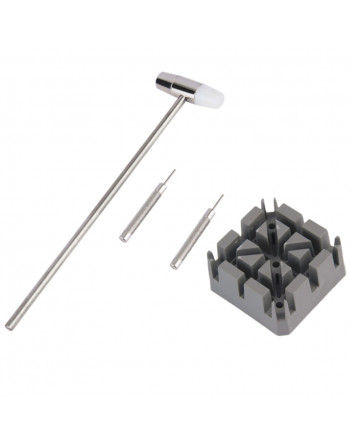
4-tool kit to size a watch bracelet to the wrist without watchmaking skills: support block, 2 manual pin punches and watchmaker hammer.
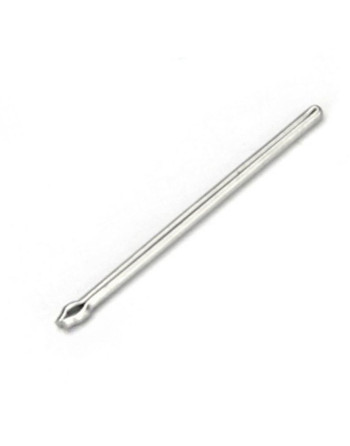
Quality slotted pin for steel watch bracelets, sold individually. Available in every size and diameter to size or repair metal straps.
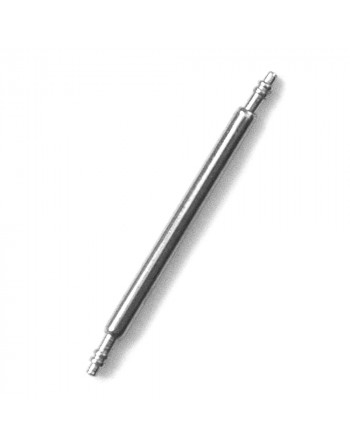
Stainless steel double-groove spring bar for watch cases and clasps. Available in lengths 6 to 37 mm and diameters 1.00 to 1.80 mm.
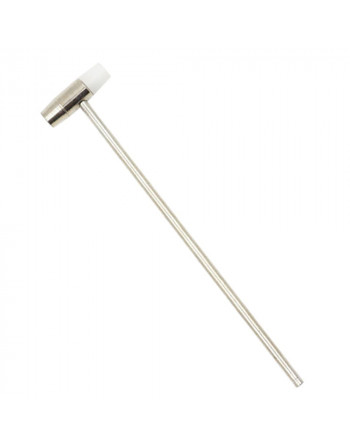
Metal watchmaker hammer for bracelets and watch cases. Plastic-tipped head prevents scratches on the watch.
Manual hammer-driven pin punch (0.70 / 0.80 / 0.90 / 1.00 mm) to drive out bracelet pins cleanly without damaging the strap.