
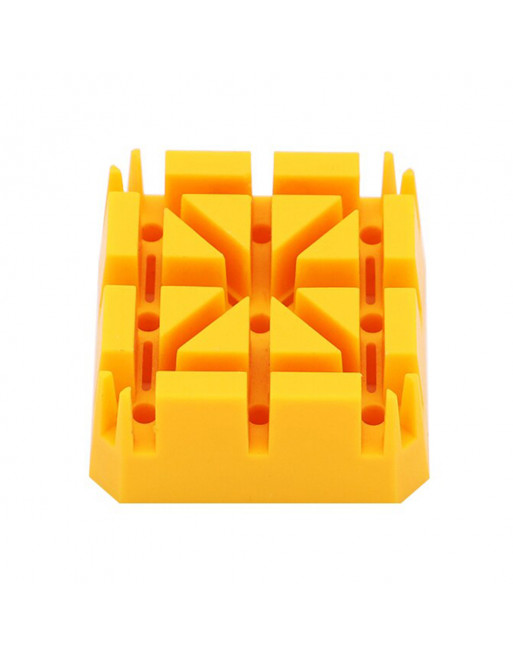
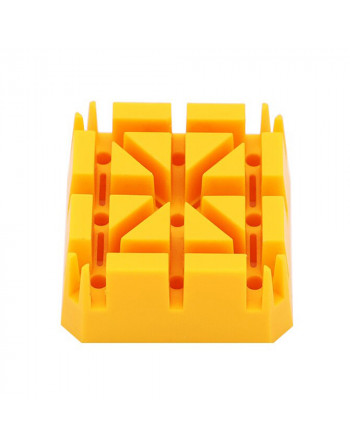
Multi-slot support block for steel watch bracelets. Holds straps of various sizes securely while removing pins or sizing links.
 100% Secure Payment
Payment through secure platforms.
 Delivery policy
Fast tracked shipping. Free shipping from €29!
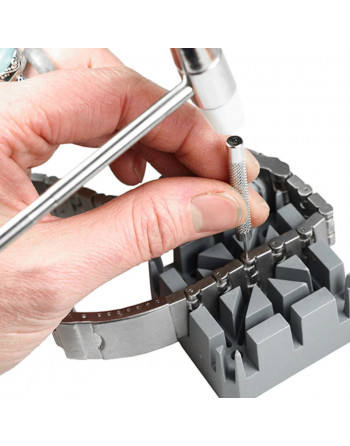
This watch bracelet repair support block is the small bench accessory that turns a frustrating link-removal job into a controlled, three-minute operation. Designed to hold a steel bracelet on its edge while you drive a pin through one of its links, it is the silent partner of every pin punch and every watchmaker's hammer.
The block carries multiple grooves on its top surface. Each groove accepts a bracelet of a different thickness, holding it perfectly on edge so the pin holes inside the link line up with exit slots drilled through the block. When you push or hammer a pin out of a link, the pin drops into the slot below instead of being trapped against the table — no jamming, no bent pins, and no marks on the workbench.
The construction keeps the bracelet from rolling sideways or sliding while you apply pressure with the pin punch. That single feature is what separates a clean link removal from a frustrating one: without the support, the bracelet rotates, the punch slips, the pin gets stuck halfway and the link can be permanently damaged. The block also doubles as a soft support for the case body during strap changes, since wood will not scratch a polished case back.
Use the support block whenever a steel link bracelet needs to be shortened, lengthened or repaired by driving pins through the links. Typical scenarios: shortening a freshly bought bracelet to fit a wrist; freeing a stuck pin from an old bracelet; replacing a broken pin; transferring a clasp from one bracelet to another. The block also gives a stable resting surface for the case during strap changes, and it provides a clean, non-marking working area on the bench.
It is not used for screwed bracelets (Rolex, certain Omega, Breitling) — those need the BERGEON 7260 screwdriver and a different work-holding approach. It is also not used for strap-only watches (leather, rubber, silicone) where the work is done at the case-strap interface with a positioning awl.
The block is a watchmaker accessory in production for decades; the wooden version uses dense hardwood that resists splitting under repeated hammer blows, and the grooves are CNC-cut for precise alignment with the exit slots. It is an inexpensive but indispensable companion to any pin punch, and it features in many of the complete repair kits in our catalogue. With normal use the block lasts many years; the only wear point is the grooves themselves, which can eventually widen if used with very heavy bracelets.
No. The wood is softer than the bracelet steel and absorbs contact without leaving marks. Plastic versions are equally non-marking.
A watchmaker's hammer is strongly recommended because the head is sized and weighted for these small jobs. A regular DIY hammer is too heavy and increases the risk of over-driving the pin.
Most steel bracelets fall into one of the supplied grooves. Very thick diver bracelets may need a wider groove; check the bracelet thickness before ordering.
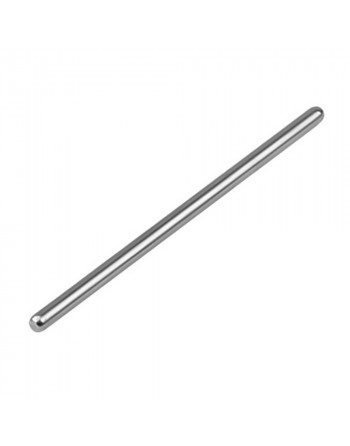
Straight cylindrical watch pin for bracelets without spring or knurl. Available in many sizes and diameters.
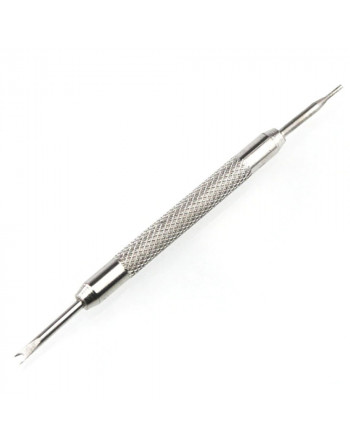
Positioning awl with 2 heads for easy handling of spring bars. Quickly swap leather, plastic or silicone watch straps.
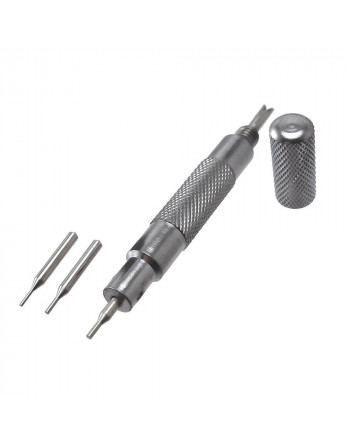
Multi-tool with pin punch + positioning awl. 3 punch diameters supplied (0.60, 0.80, 1.00 mm) and a forked head to fit spring bars.
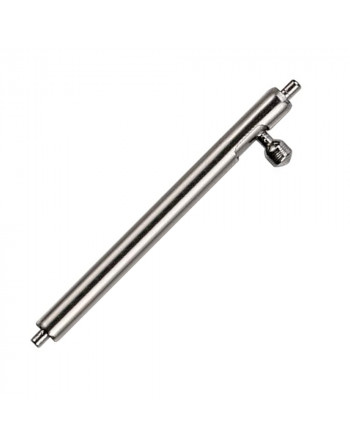
Quick-release spring bar with side lugs, for fast strap changes without tools. Available in standard widths.
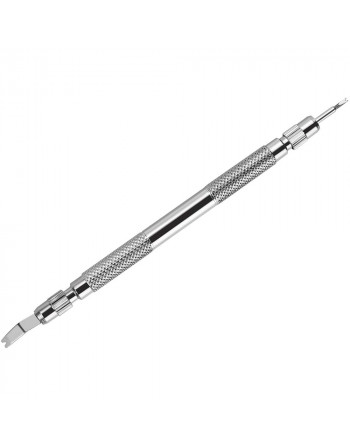
Professional dual-tip stainless steel positioning awl. Knurled grip section ensures precise handling when fitting leather or silicone straps.
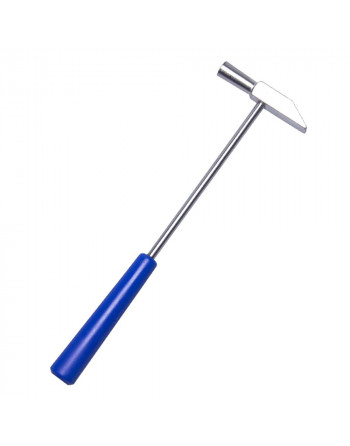
Professional hammer for watch repair, useful for refitting bracelet pins on steel straps.
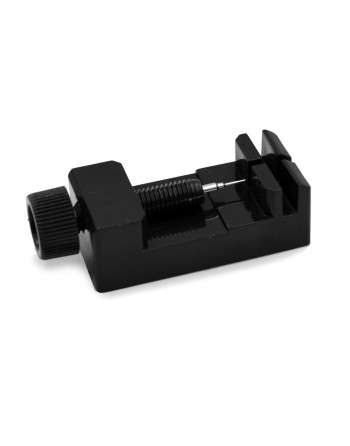
Compact watch pin punch to resize small metal or ceramic bracelets. Supplied with 2 spare tips for removing links easily.
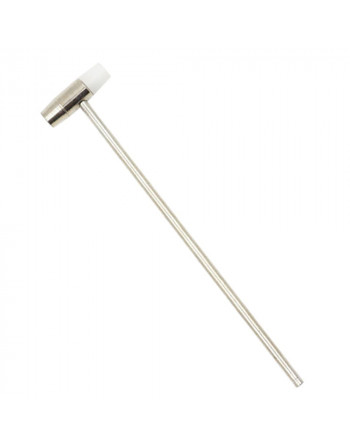
Metal watchmaker hammer for bracelets and watch cases. Plastic-tipped head prevents scratches on the watch.
Multi-slot support block for steel watch bracelets. Holds straps of various sizes securely while removing pins or sizing links.