
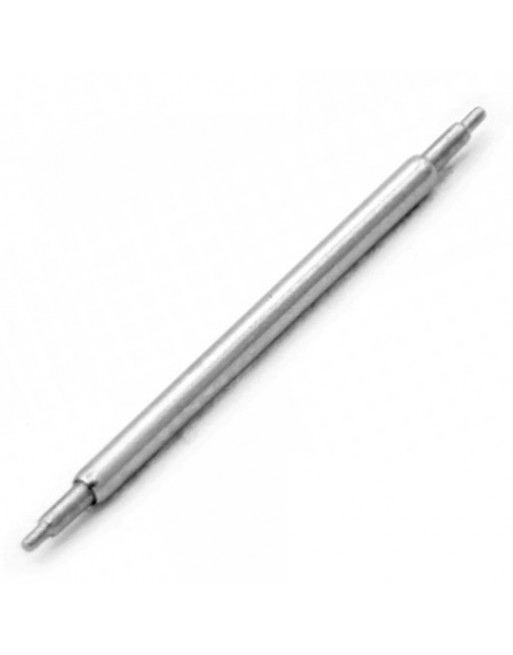
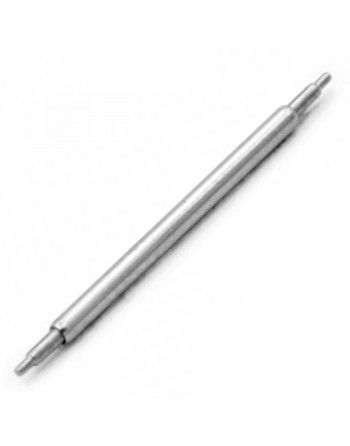
Double-shoulder watch spring bar, Ø 1.30 mm. Designed for cases or clasps requiring a shoulder-end spring bar.
 100% Secure Payment
Payment through secure platforms.
 Delivery policy
Fast tracked shipping. Free shipping from €29!
This double-shouldered spring bar Ø 1.30 mm is a precision watch part used to connect a strap or bracelet to the case of a wristwatch, or to anchor a folding clasp to the bracelet itself. Sold individually, it is offered in several lengths and diameters so that you can replace a worn or corroded original part with an exact match and restore the watch to full working order.
The spring bar is the small spring-loaded rod that sits inside the lug holes of a watch and keeps the strap firmly attached to the case. When the original spring bar weakens, rusts or breaks, the watch can fall off the wrist — replacing it with a high-grade reference such as this double-shouldered spring bar Ø 1.30 mm is therefore one of the most important small repairs you can carry out. Diameter 1.30 mm, several lengths available.
Choose this double-shouldered spring bar Ø 1.30 mm when the original spring bar on your watch is corroded, has lost its spring or no longer holds the strap securely. It is also the part to use when you fit a new strap — a NATO, leather, rubber or silicone band — because the diameter and length of the bar must match the lug width and the lug-hole geometry. Slim dress watches typically need a thinner bar; sport watches and divers from Seiko, Omega Seamaster, Tudor Pelagos or Rolex Submariner generations need a bar sized for heavier loads.
Our spring bars are sourced from established Swiss suppliers such as ISO Swiss and from quality stainless steel manufacturing partners. The 316L stainless steel grade is preferred because of its low carbon content, which improves corrosion resistance in chlorinated, salty or humid environments — essential for dive watches and for daily wear. Each reference is checked dimensionally to keep manufacturing tolerances tight, so the new bar drops cleanly into the lug holes of brands like Rolex, Omega, Tudor and Seiko without filing.
How do I know which diameter I need? Measure the original spring bar with a digital caliper, or take note of the diameter written on the side of the bag of the previous reference. Common diameters range from 1.30 mm to 1.80 mm.
Will this spring bar fit my Rolex or Omega bracelet? Many integrated steel bracelets use specific shouldered or grooved bars; check the end style against your existing part before ordering.
What if the new bar is slightly too long? Compress it with the spring bar tool fork — a small over-length is normal and helps the tips seat firmly inside the lug holes.
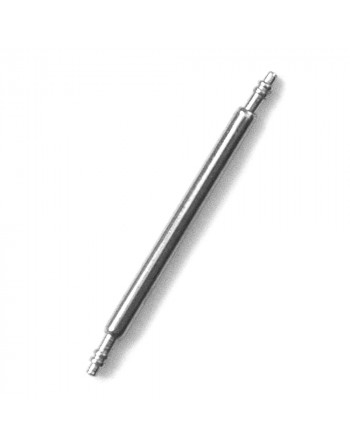
Stainless steel double-groove spring bar for watch cases and clasps. Available in lengths 6 to 37 mm and diameters 1.00 to 1.80 mm.
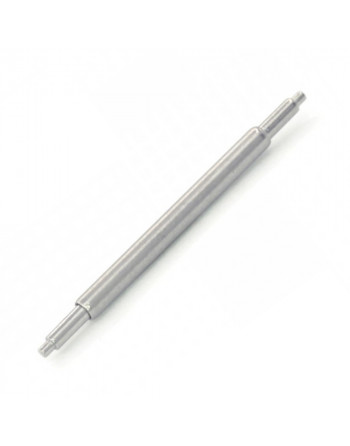
Universal extra-telescopic spring bar with extended retraction. Ideal for protected lugs or hard-to-reach cases.
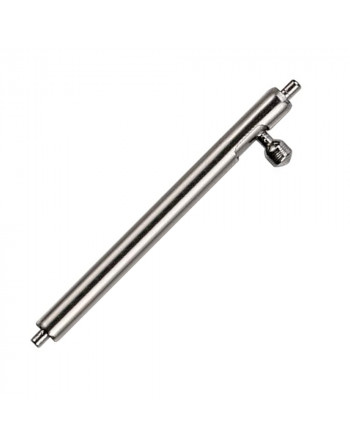
Quick-release spring bar with side lugs, for fast strap changes without tools. Available in standard widths.
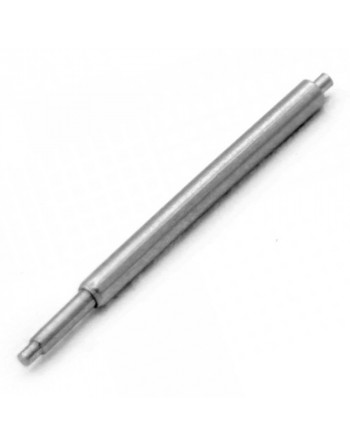
ISOSWISS one-sided double-shoulder spring bar. Designed for case/clasp configurations needing an asymmetric shoulder.
Double-shoulder watch spring bar, Ø 1.30 mm. Designed for cases or clasps requiring a shoulder-end spring bar.