
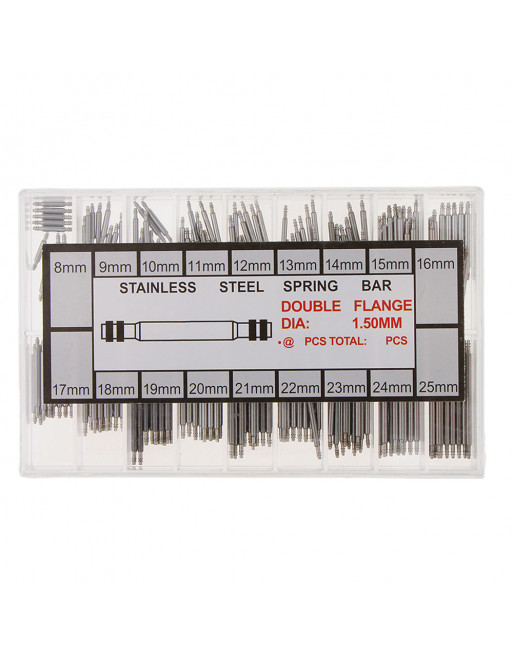
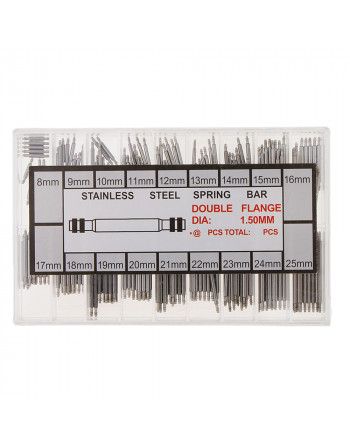
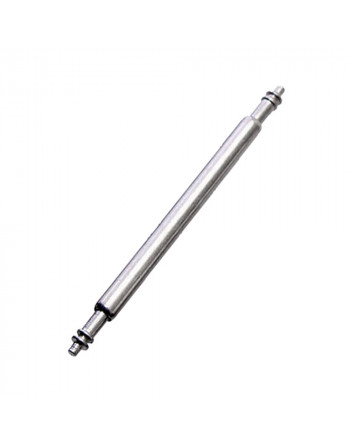
Assortment of 360 generic double-groove spring bars, Ø 1.50 mm, 18 sizes from 8 to 25 mm. Ø 1.50 mm is the most common size on the market.
 100% Secure Payment
Payment through secure platforms.
 Delivery policy
Fast tracked shipping. Free shipping from €29!
This is a complete set of 360 spring bars in 1.50 mm diameter, covering lengths from 8 – 25 mm. This box covers 18 different lengths spanning the 8 mm – 25 mm range, with approximately 20 units per length, for a total of 360 pieces. Each spring bar is machined from stainless steel and features the double-shoulder double-groove geometry used by virtually every modern watchmaker to retain a bracelet between the lugs of a watch case.
A spring bar is a small spring-loaded telescopic bar fitted between the two lugs of a watch case. Compressed at each end, its tips drop into the holes drilled in the inside of the lugs and hold the strap or bracelet firmly in place. The spring bar is by far the most common bracelet-retention component in horology and is used on quartz, automatic and chronograph references from entry-level brands all the way up to high-end manufactures. With this box, a watchmaker, jeweller or enthusiast can address virtually any 18-mm, 20-mm or 22-mm lug width that ships from the factory with 1.50 mm bars — typical of mid-size men's pieces, unisex tool watches and many ladies' dress watches.
Reach for this box whenever you notice that a bracelet or strap no longer holds firmly between the lugs, when the side play of a link has become visible, when a bracelet had to be resized in the past and the original pin was lost or bent, or simply when a customer brings in a watch whose retention component is missing. The 8 – 25 mm range covers virtually every adult wrist watch on the market and most ladies' references; it is comfortable for 18-, 19-, 20-, 21- and 22-mm lug widths, the four most common in the industry. Professional watchmakers will appreciate having every length on hand without re-ordering; enthusiasts will value the freedom to swap a strap for a fashion change without paying boutique prices for a single replacement pin.
Each piece is machined from stainless steel (typically AISI 304L or 316L grades depending on the production batch), bright-finished and passivated to resist sweat and skincare residues. The spring bars feature hardened spring steel inside the body, with a calibrated spring rate that keeps the tips engaged even under the shocks of daily life. Knurled pins are work-hardened in the knurling zone so they hold their grip after several removals. Our boxes ship from European stock with a per-size visual control and a length tolerance kept within ±0.1 mm.
With a digital calliper, measure the inside lug-to-lug width of your watch case, then subtract approximately 0.1–0.2 mm — that is the spring bar length you need. For pins driven into a steel bracelet, measure the existing pin or the width of the link from the outside.
Yes for the diameter that matches your reference: 1.50 mm fits most Submariner-, Datejust-, Speedmaster- or Black Bay-style cases that use generic spring bars. For original Rolex / Omega service, the OEM-coded part may be required by warranty. These pieces are non-OEM but dimensionally compatible.
A spring bar may be reused as long as its tips still spring freely and have not been chamfered by repeated tool marks. A watch pin of split or knurled type loses grip after one or two removals and should be replaced to avoid losing the link in service.
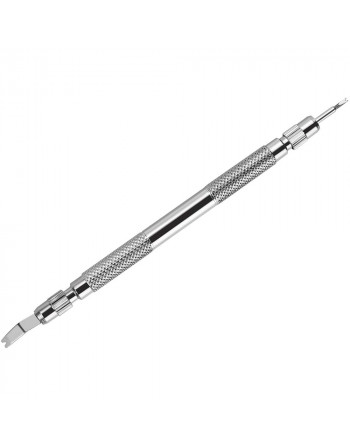
Professional dual-tip stainless steel positioning awl. Knurled grip section ensures precise handling when fitting leather or silicone straps.
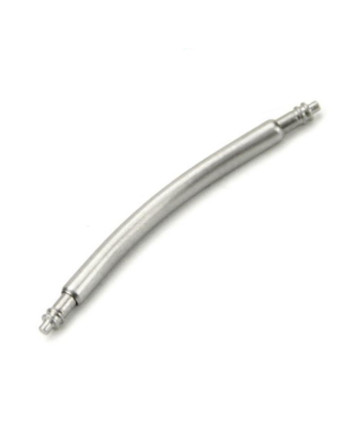
Curved double-groove stainless steel spring bar, Ø 1.30 to 1.80 mm, all lengths. Connects case to bracelet on arched lugs.
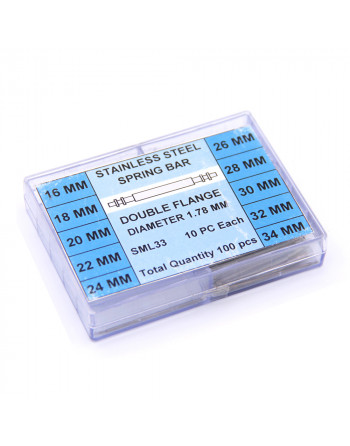
Box of large double-groove spring bars Ø 1.78 mm, 10 sizes from 16 to 34 mm. Ideal for oversized watches and big-strap collections.
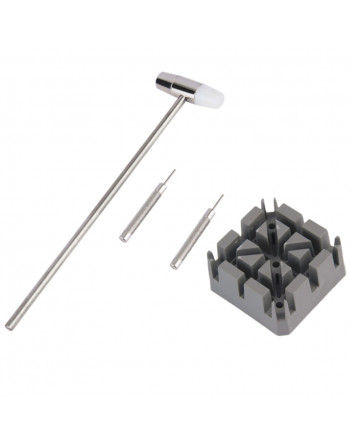
4-tool kit to size a watch bracelet to the wrist without watchmaking skills: support block, 2 manual pin punches and watchmaker hammer.
Assortment of 360 generic double-groove spring bars, Ø 1.50 mm, 18 sizes from 8 to 25 mm. Ø 1.50 mm is the most common size on the market.